Tom Coleman Porcelain Workshop
The Coleman School of Porcelain is located in Henderson, Nevada. Tom and Elaine Coleman are internationally recognized masters of porcelain pottery, celebrated for their decades-long artistic collaboration and technical expertise.
Workshop Highlights:
• Glazing instruction for Tom’s experimental Shino, including techniques for spraying glazes, dipping and pouring, and refined brushwork using over-glazes to achieve varied surfaces and effects.
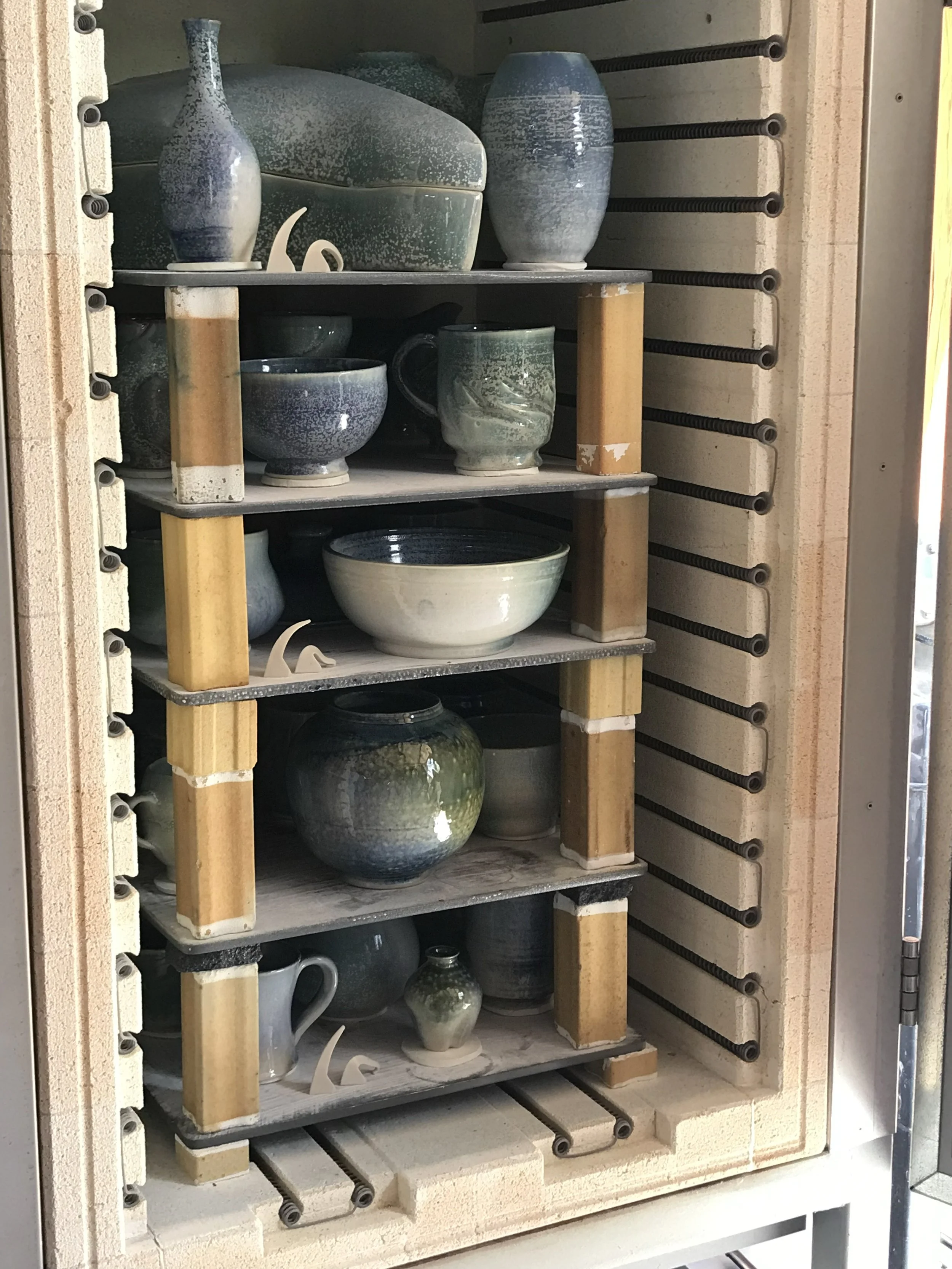
• Kiln preparation, firing schedules, loading and firing the Geil kilns to Cone 10 for both gas reduction and electric oxidation.
• Porcelain wheel-throwing demonstrations led by Tom Coleman, highlighting his approach to form, proportion, and finishing.
• Hands-on wheel time for the eight workshop participants, providing individualized guidance and practice opportunities.
• Elaine Coleman discusses her design approach and demonstrates her incising techniques, explaining how line and texture inform her work.
• Amy Kline, longtime apprentice to Tom and Elaine Coleman, shares her porcelain techniques and studio practices developed through years of mentorship and collaboration.
My quick take on the five day porcelain workshop.
I took my first workshop in October of 2025. At that time, I was just setting up my own ceramics studio after being a member at a community studio. For this second workshop I was at a different place in my ceramics journey. I am now fully running my own studio, mixing glazes, and firing my own work. It’s not often that you have an opportunity to learn from the masters in their studio. Tom Coleman has sixty years of experience working in ceramics and I had lots of questions to ask!
Day 1:
It was all about getting settled in. Learning about what glazes are available for a reduction cone 10 firing, along with putting together a glaze plan for the twenty pieces of pottery we brought to the workshop. All my pieces had been thrown with Tom Coleman’s Porcelain, his formulation is made and available through Aardvark Clay & Supplies. The wheel thrown pieces I brought were fired to cone 010 at my ceramics studio. Bisque firing at cone 010 leaves the porcelain open to accepting more glaze so that the glaze and porcelain fuse together and become one. Per Tom Coleman, “Porcelain is the closest thing to glass”. Tom demonstrated how to use a spray gun to spray slips (a liquid mix of porcelain) which will be bisque fired again to cone 010. Working at your own studio the slip can be sprayed on greenware and bisque fired once at cone 010. After the slipped pieces have been fired we’ll then spray, dip or pour the glazes of our choice onto the pottery. When using the spray gun it’s best practice to sieve your glaze into the container of the spray gun.
Day 2:
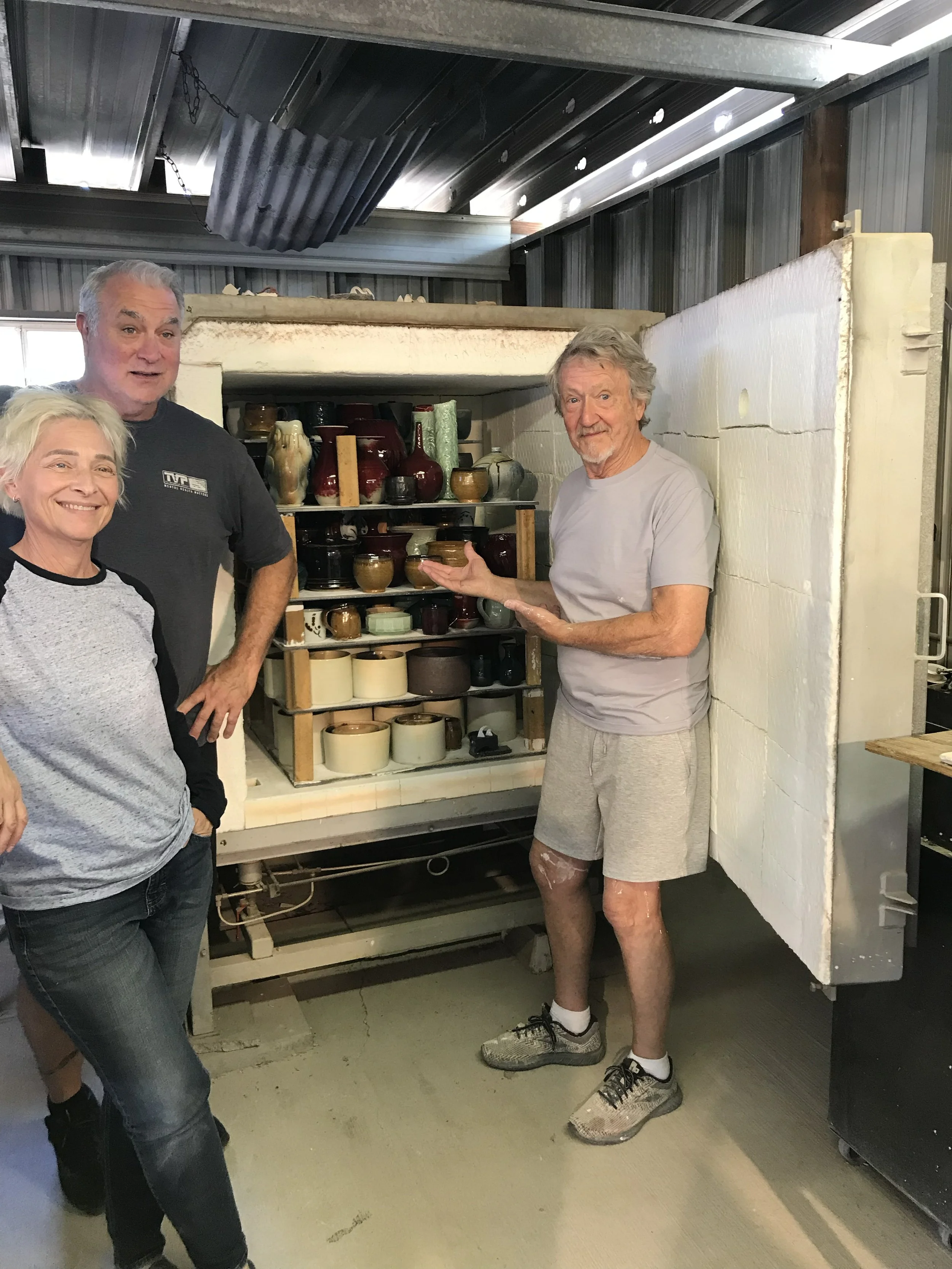
It was a busy day at the workshop. Everything was buzzing. Lots and lots of glazing happening along with excellent demos. I helped load the kiln by placing all like size pieces in groupings. Tom and his assistant James did the heavy lifting by planning and placing each piece in the load. It was looking like we had too many pieces to fit into the kiln. They masterfully got everything to fit for a full kiln load in the 18 cubic foot Geil Gas Kiln. We also had a full load in the Geil Electric Kiln, loaded by apprentice Amy Kline. Can’t wait to see the results!
Day 3:
There is so much to learn in the realm of pottery and ceramics. I am in awe of Tom Coleman’s mastery in throwing porcelain—sixty years of devotion and refined skill. Where will I be in sixty years? What kind of ceramics will I be making then, and how will my vision have changed? Hmm, something to reflect on and carry forward as I keep learning.
Throwing tip; it is important to remove slip on the inside and outside of the pots you are throwing. A fan can be used to help dry the piece and a heat gun or torch should never be used with porcelain.
Day 4:
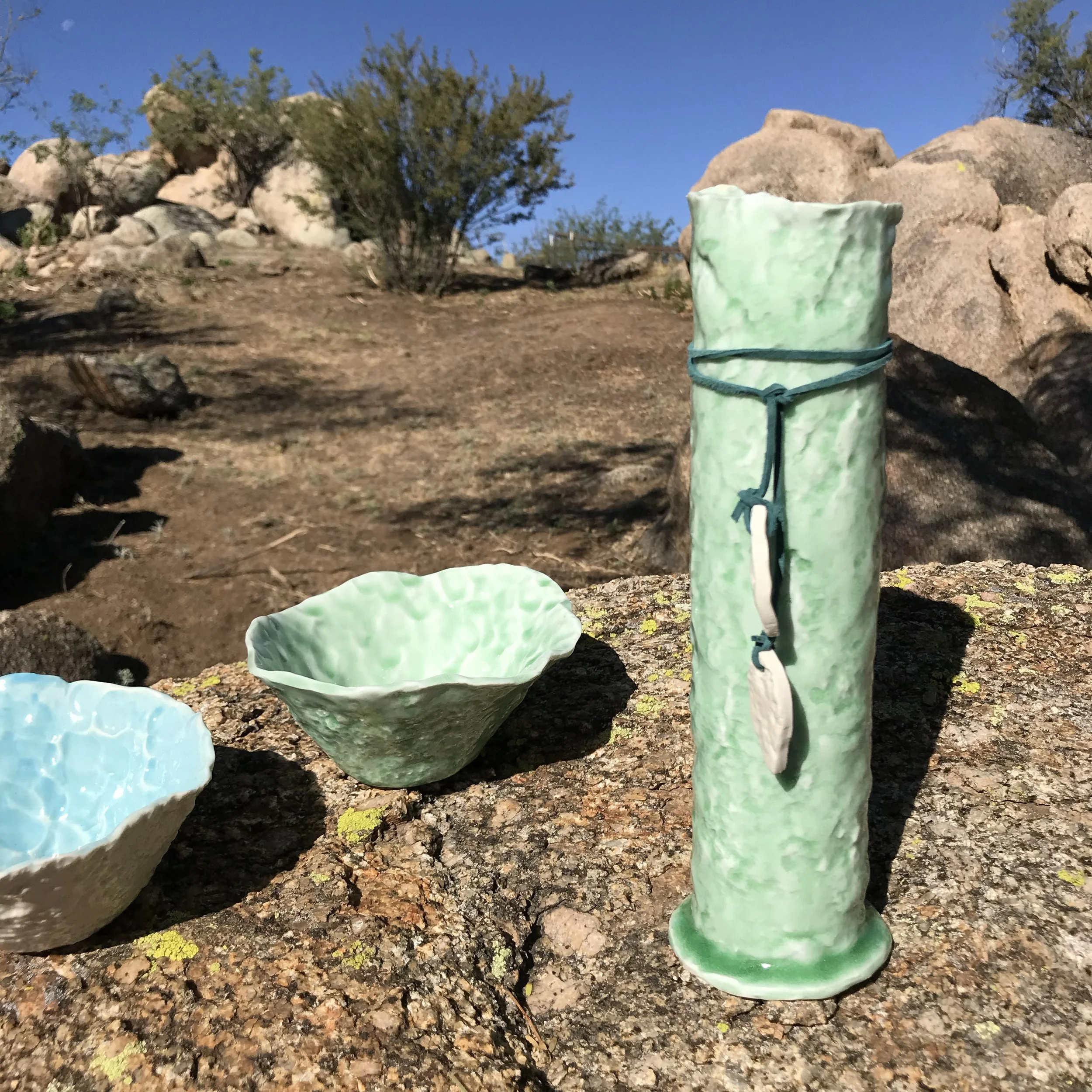
Tom Coleman has developed glazes specifically for porcelain over his sixty years in the ceramics field, most notably his copper reds. Tom graciously shares these formulas with his students and other potters. Elaine Coleman uses specific celadon high-fire glazes that are translucent and typically a pale jade-green color. This type of glaze enhances and brings out the details in her incising technique. They exquisitely shine and her work comes to life. Amy Kline has developed specific glazes for the electric kiln that complement her work beautifully, as well as the students pottery. The three are continuously testing new glaze formulas. The ceramics industry has been going through changes with mines closing across the globe and minerals that are no longer available. Substitutions and adjustments are necessary on an ongoing basis in glaze formulas.
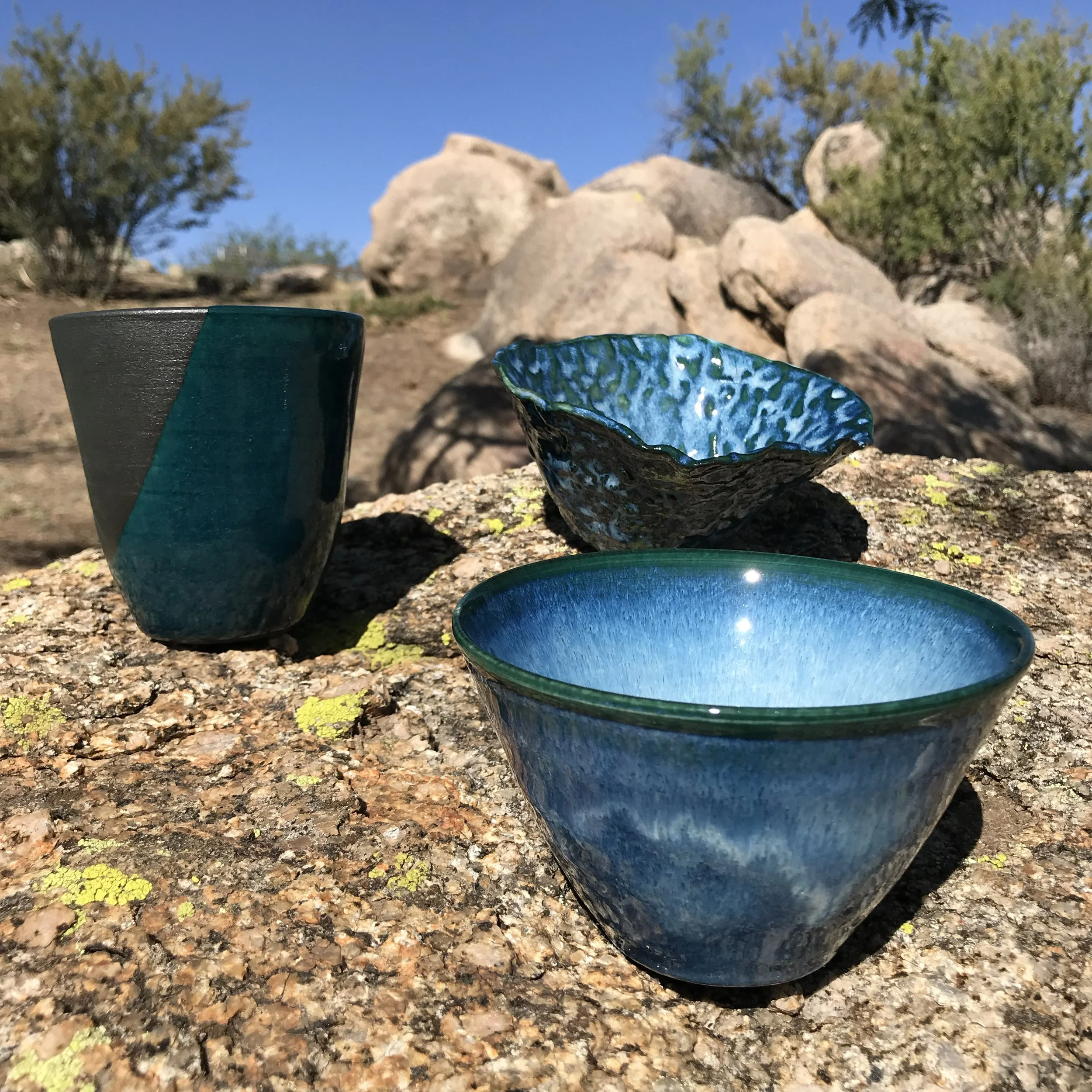
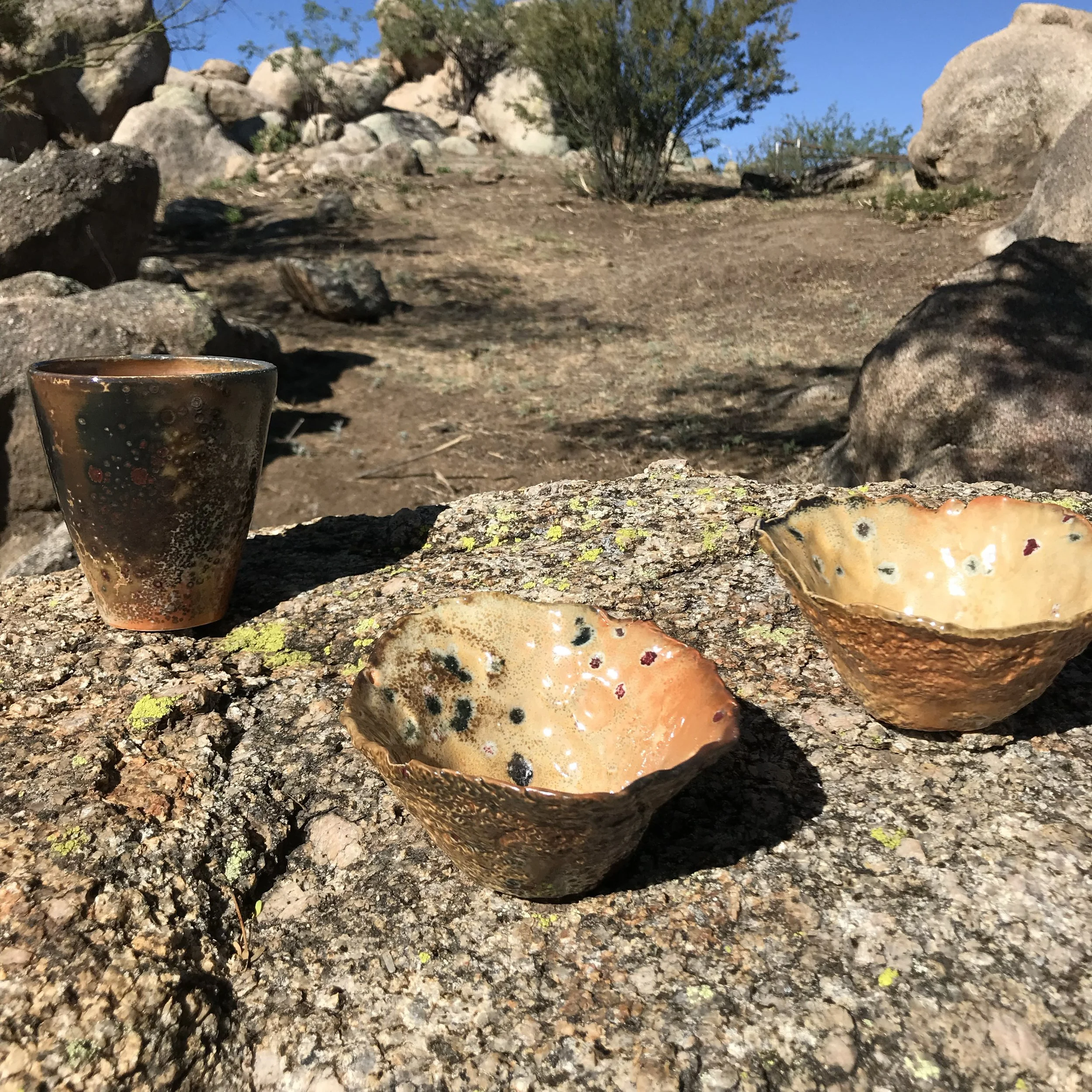
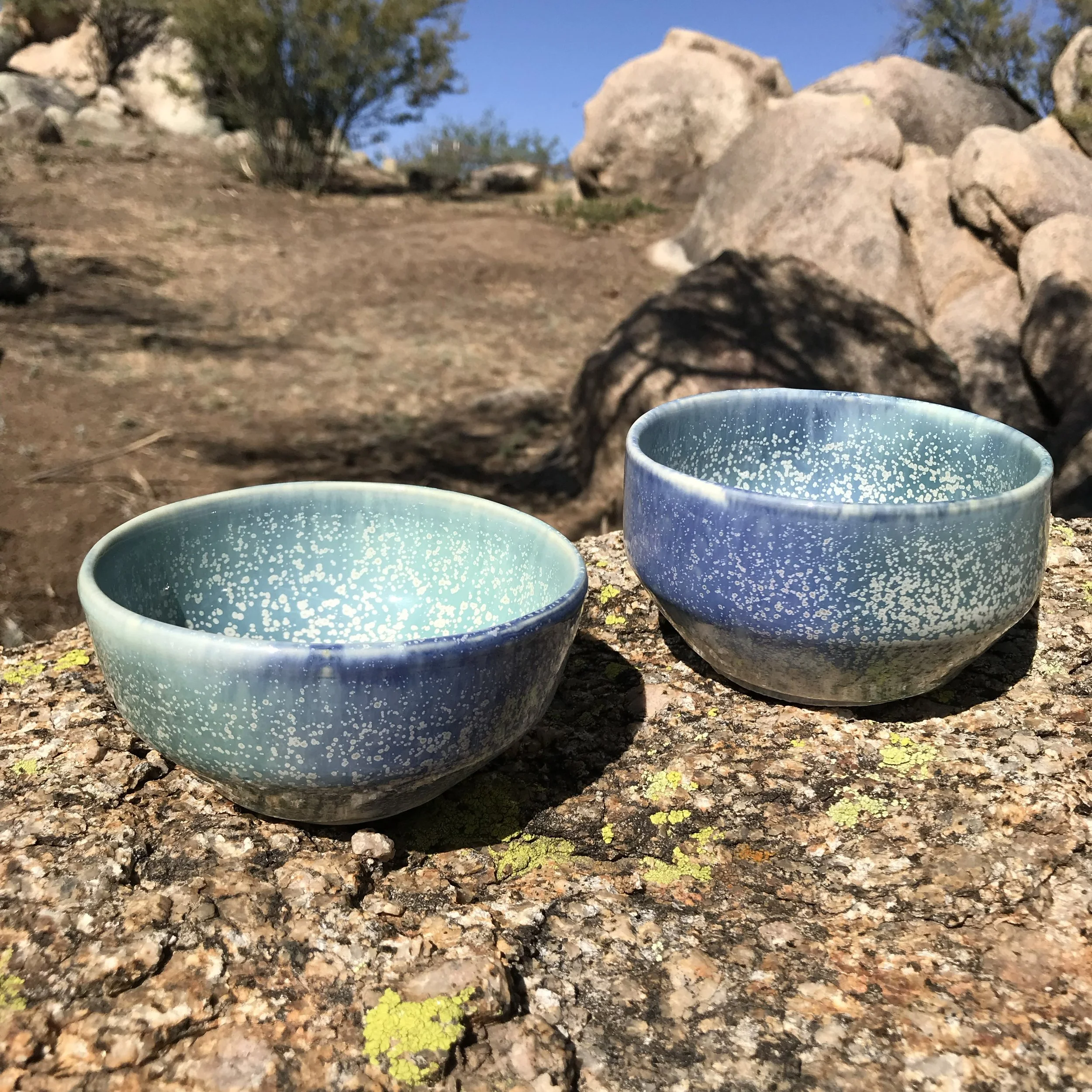
Exciting day! The kilns are ready to open. All are very happy with the results (except maybe one person). Everyone’s work is beautiful!!!
Day 5:
After a successful glaze firing comes a day of celebration starting with breakfast at The Patio in Boulder City, Nevada. A delicious meal and the dish to try is the Divorced Eggs. And any of the Eggs Benedict dishes are also good. After brunch we headed back to Tom and Elaine’s studio. Tom showed us how to polish the bottom of our pots using a bench grinder with a grinding wheel and a polishing wheel. He also showed us how to properly photograph our work, sharing useful tips and techniques.
In conclusion Tom Coleman’s Porcelain workshop is about learning from a master in the art of porcelain. Tom Coleman is a pioneer in the field, developing his own formula for porcelain which is like glass when high-fired to cone 10 (2,350 Degrees Fahrenheit). Tom fires his work and his students work in a gas fired reduction kiln. There is also an electric kiln for the students to use directed by Amy Kline. The demonstrations are customized to what the eight students in the workshop are interested in learning. These are just a few of the things that Tom Coleman covered in his porcelain workshop. Tom covered how to throw and assemble three piece forms and then we witnessed how he expands the form and hand alters it. Coleman shared his approach to pulling handles for pitchers and cups, creating a fluted jar, throwing his apple jar with lid and trimming techniques on various surfaces. I highly recommend taking a Tom Coleman Workshop and I am already planning my next workshop with him.
Thanks for reading! Follow me on Instagram @lisaloveceramics